- Last Update10-Apr-2026


- Tweet
-
King Abdullah affirms enduring security amid regional turmoil - By Amal Awwad Al-Ma’aytah, The Jordan Times
The recent high-level meeting chaired by His Majesty King Abdullah at Al Husseiniya Palace was far more than a routine consultation. It was a deliberate assertion of state authority at a time of mounting regional volatility. By convening former prime ministers alongside senior officials, the King signaled that Jordan is not passively absorbing external shocks but actively consolidating a unified national front capable of withstanding them.
In a Middle East increasingly shaped by fragmentation and unpredictability, the King’s message was both clear and strategic: Jordan remains secure, and that security rests on the strength and discipline of its institutions. His explicit confidence in the Jordan Armed Forces (Arab Army) and the broader security apparatus goes beyond reassurance. It is a calibrated signal, domestically and internationally, that the Kingdom is prepared for a wide spectrum of contingencies. In such an environment, projecting confidence is not merely symbolic; it is an integral component of deterrence.
Crucially, the meeting underscored that Jordan’s approach to security extends beyond military readiness. The emphasis on inter-agency coordination and the safeguarding of strategic reserves reflects a sophisticated understanding of modern risk. Today’s threats are not confined to conventional conflict. Economic disruption, supply chain instability, and energy insecurity- particularly those linked to chokepoints like the Strait of Hormuz- pose equally serious challenges. Jordan’s focus on preparedness in these areas suggests a state thinking proactively, not reactively.
This strategic posture was reinforced during the King’s recent visit to the Royal Jordanian Air Force Command. Accompanied by Crown Prince Al Hussein, His Majesty engaged directly with operational realities, reviewing combat readiness, modernisation plans and advanced surveillance systems. His interaction with pilots, and emphasis on maintaining peak performance, conveyed a clear message: national defense is not an abstract concept, but a continuous process of adaptation and vigilance. In an era where aerial threats and asymmetric warfare are increasingly prominent, control of airspace has become a central pillar of sovereignty.
At the regional level, Jordan’s posture is evolving toward greater assertiveness. The King’s condemnation of Iranian actions, coupled with support for de-escalation initiatives involving the United States and mediation efforts by Pakistan, reflects a pragmatic yet engaged foreign policy. Jordan is positioning itself as a stabilising actor; one that advocates for calm but is equally prepared to influence outcomes rather than simply endure them.
This assertiveness is most evident in His Majesty’s remarks regarding Israel. By warning that Israel may be leveraging regional distractions to intensify its actions in the West Bank and Jerusalem, Jordan is elevating the issue beyond bilateral concern to a matter of international urgency. This is a calculated diplomatic move aimed at refocusing global attention. For Jordan, the stakes are not abstract; they are immediate and strategic, bound up in its historic custodianship of Jerusalem’s holy sites and its core national security interests.
Equally significant is the composition of the meeting itself. The inclusion of former prime ministers and senior officials reflects a governance model rooted in continuity, institutional memory, and collective responsibility. In times of heightened uncertainty, such cohesion is more than symbolic; it enhances the state’s capacity to respond effectively to complex challenges.
Taken together, these developments point to a coherent and evolving strategy. Jordan is reinforcing its internal resilience through disciplined institutions and forward-looking planning, while simultaneously adopting a more active and assertive role in shaping its external environment. This is not the posture of a state on the defensive, but of one intent on preserving stability, projecting influence, and safeguarding its interests.
In a region where volatility is the norm rather than the exception, Jordan’s approach stands out for its clarity and purpose. Stability, as the Kingdom’s leadership makes clear, is not a passive condition- it is a strategic choice, continuously reinforced through action.
Latest News
-
 Prime minister condemns Israeli aggression, reiterates full support for Lebanon
-
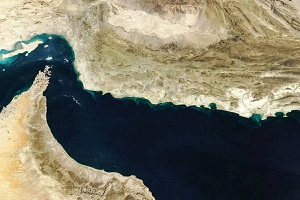 First ships through Strait of Hormuz since ceasefire: monitor
-
 Pakistan PM Says US-Iran Ceasefire Violations Reported, Urges Restraint
-
 US, Israel and Iran Agree to 2-week Ceasefire
-
 Trump says US will help 'with traffic buildup' in Hormuz Strait