- Last Update14-Apr-2026


- Tweet
-
Lebanon-Israel talks open amid widening gap between diplomacy, war
AFP
AMMAN — Lebanon and Israel will hold rare ambassador-level talks in Washington on Tuesday, in a diplomatic move overshadowed by ongoing fighting and low expectations for a breakthrough, according to the American news website Axios.
The meeting, hosted at the US State Department, marks the highest-level contact between the two sides in decades.
US Secretary of State Marco Rubio is expected to attend, alongside Lebanon’s ambassador to Washington Nada Hamadeh Mouawad and Israel’s ambassador Yehiel Leiter.
The talks follow recent contacts aimed at launching a negotiation track and securing a ceasefire, according to Lebanese officials.
Israel said it agreed to begin “formal peace negotiations” with the Lebanese government, but ruled out discussing a ceasefire with Hizbollah, describing the group as the main obstacle to any agreement.
Israel's foreign minister Gideon Saar said his country is seeking "peace and normalisation" with Lebanon, ahead of talks between officials from both nations in Washington on Tuesday, AFP reported.
"We want to reach peace and normalisation with the state of Lebanon... Israel and Lebanon don't have any major disputes between them. The problem is Hizbollah," Saar said at a press conference.
Hizbollah rejected the talks. Its secretary-general Naim Qassem called the negotiations “pointless” and urged their cancellation.
A US official said Israel considers itself at war with Hizbollah, not the Lebanese state, suggesting that dialogue with Beirut remains possible despite ongoing hostilities.
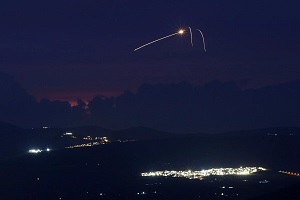
On the ground, the conflict continues to escalate.Israel’s military said it struck around 150 Hizbollah targets across southern Lebanon over the past 24 hours. The strikes targeted military sites, missile launch positions and command centres.
Lebanese authorities reported casualties, as the fighting extends across multiple areas.The war has already caused heavy losses.Lebanon’s health ministry said more than 2,000 people have been killed since the escalation began, including civilians and healthcare workers.
Prime Minister Nawaf Salam said the government is working to secure a ceasefire and ensure the withdrawal of Israeli forces.“We are continuing our efforts to stop this war,” he said.
Israel signalled that operations will continue. prime minister Benjamin Netanyahu said the campaign is not over and stressed the need to eliminate Hizbollah ’s capabilities. He also indicated plans to maintain a “security zone” in southern Lebanon.
The gap between diplomacy and military realities remains wide. The Washington talks reflect an attempt to revive dialogue, but they come as violence continues on the ground. Israel has said the broader regional ceasefire does not apply to Lebanon, reinforcing concerns that the conflict may persist even as other tracks stabilise.
Political analyst Amer Sabaileh said the talks may help define and manage the conflict, but are unlikely to resolve it.“The negotiations are important in shaping and controlling the conflict, but they do not address the core problem,” he said.
He added that the issue has become increasingly internal to Lebanon, particularly regarding the future of Hizbollah ’s weapons.“The question now is who has the ability to disarm Hizbollah , and whether those weapons could be used internally,” he said.
He also warned of a shift in focus.“There are indications that Hizbollah ’s positioning is no longer directed only at Israel, but increasingly towards the internal Lebanese arena,” he said.
The coming period will show whether diplomacy can gain ground, or whether the conflict will continue to be shaped by military realities and unresolved internal dynamics.