- Last Update22-Jan-2026


- Tweet
-
Parliament stands: Reform moves on - By Mohammad Abu Rumman, The Jordan Times
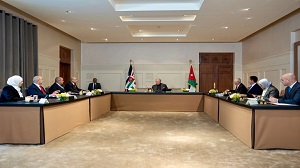
His Majesty King Abdullah’s meeting with the Permanent Bureau of the House of Representatives carries, in itself, an important message affirming that Parliament will continue until the end of its constitutional term, and that the political modernisation project remains in place as a strategic choice of the state. The aim is to develop partisan and political life, integrate women and younger generations into the political process and decision-making positions, and ultimately strengthen the relationship between the state and society while fostering concepts of partnership, political participation, and shared responsibility.
It is clear that this message has reached many voices that, over recent months, tended to exaggerate and inflate fears about the repercussions of the decision by US President Donald Trump concerning the Muslim Brotherhood in several countries, including Jordan. Some even expanded the presumed impact of the (then-anticipated) US decision to scenarios involving the dissolution of Parliament or a review of the political modernisation project, among other possibilities that were not grounded in a deep or accurate reading of the rational and pragmatic calculations that characterize decision-making circles in Amman.
Many of the opinions expressed during that period perhaps reflected personal wishes and desires more than they did a balanced and conscious reading of Jordan’s national interest. It is evident that the scope of the decision issued so far does not go beyond the minimum limits related to the status of the Muslim Brotherhood (the dissolved group in Jordan) or the Islamic Action Front Party, which represents the country’s main opposition party. There will be no additional annexes or lists including institutions or individuals, at least in the near future, linked to the US decision, despite the scale of lobbying efforts seeking to broaden its application and the range of institutions and associations it might otherwise encompass.
Above all, and this is the most important point, it is neither wise nor logical to link the fate of political modernisation, the objectives of developing political and partisan life, and the parliamentary experience to a global or regional event here or there, or to the fate of a particular political party. It is essential, on the one hand, to draw a clear distinction between these matters, and on the other, for the Jordanian political elite to develop a deeper awareness that political modernisation is, above all, a royal project, one that enjoys firm conviction on the part of the King. It is not tied to a transient or temporary circumstance, but rather to a clear strategic vision that was strongly articulated in the Royal Discussion Papers published years before the launch of the political modernisation project and the subsequent changes to the laws governing political life.
Why is political modernisation strategically important? Because it represents the primary path for advancing political life, shifting it from an individual, short-term framework and unstable policies toward a collective, organized, and party-based framework. This transition contributes to the development of government programs and policies, the elevation of new political elites, and the building of political traditions that enhance the peaceful rotation of power between successive governments. It also involves society more directly in decision-making and in bearing the consequences of those decisions, while moving away from a perpetual state of grievance, whether related to the inheritance of positions or the gap between governments and the public.
Jordan differs, in its contexts, circumstances, internal composition, historical experience, and the nature of leadership and its relationship with society, from the majority of Arab states. The secret behind the success and resilience of the Jordanian experience lies in its ability to anticipate the future and to deal efficiently and flexibly with strategic challenges, both domestically and externally. Today, strengthening the political transition toward pluralism, party-based parliamentary governments, and broader political participation has become a strategic choice rooted in a firm conviction at the leadership level. If there are significant external challenges and multiple sources of regional instability, confronting them does not lie in political retreat, but in deepening the modernisation process, reinforcing internal resilience and putting the domestic house in order, rather than the opposite.
Latest News
-
 Trump Continues Inviting Countries to Join “Peace Council”
-
 Jordan condemns Israel’s demolition of UNRWA buildings in Jerusalem
-
 Trump says not thinking 'purely of peace' in Greenland push
-
 Talks between Damascus, Kurdish-led forces 'collapse': Kurdish official
-
 King meets with House of Representatives’ permanent office