- Last Update04-Dec-2025


- Tweet
-
What risks are we overlooking in Jordan’s AI boom? - By Lubna Hanna Ammari, The Jordan Times
Jordan’s accelerating adoption of artificial intelligence is often framed as a story of economic opportunity, rising innovation and national competitiveness. Yet the deepest risks in AI expansion tend to hide beneath the surface. These risks are rarely technical alone; they are social, cultural, economic and infrastructural. For Jordan, a country deliberately shaping its digital transformation, acknowledging these risks is not a pessimistic exercise but an essential step in building a resilient and equitable AI ecosystem.
AI-related risk is inseparable from social and cultural context. In Jordan, where communities are diverse and sensitive to cultural norms, deploying AI in education, healthcare, media or public services requires careful reflection on its potential impact on social values, identity and equity. Algorithms used in student assessment, job matching or public communication may appear neutral, yet they influence perceptions of fairness, opportunity and representation. For Jordan, this means that any large scale AI adoption must integrate cultural awareness and social safeguards to avoid unintended disruption in sectors that directly interact with citizens.
Another overlooked dimension is the true cost of AI. Contrary to the popular notion that AI is virtual and therefore resource light, advanced AI systems demand significant computational power and considerable electricity consumption. This issue becomes particularly relevant for Jordan, where energy costs remain high and digital infrastructure is unevenly distributed across governorates. As AI adoption expands, ensuring that the country can support computational needs sustainably becomes not just a technical consideration but a national planning priority. Without this awareness, Jordan risks creating AI projects that are economically heavy yet operationally fragile.
Data bias is another critical area that affects AI deployment globally and regionally. In the Middle East, including Jordan, datasets often lack linguistic, cultural and socio economic diversity. When AI systems are built on data that does not reflect local realities, they may produce skewed outputs or reinforce inequities in sectors such as hiring, banking, public services or predictive analytics. Addressing this requires local data governance frameworks, culturally representative datasets and investment in Arabic-language AI development.
Beyond these core issues, Jordan must also consider broader categories of risk tied to AI expansion. These include privacy vulnerabilities, cyber security threats, potential misuse of AI, environmental burdens, systemic failures, economic concentration and the risk of excluding communities that lack digital access. For Jordan, these concerns intersect with existing national challenges such as rural-urban digital divides, fragmented data governance and a labor market already under pressure from automation and regional competition.
Recognising these risks does not diminish the promise of AI for Jordan. Instead, it invites a more intentional and strategic approach. The national focus should extend beyond celebrating technological adoption to building regulatory frameworks, ethical guidelines, public awareness programs and robust national data infrastructure. Jordan’s strength has always been its human capital, and as the country considers how AI can support sectors ranging from tourism to healthcare to education, it becomes increasingly important to ensure that the technology enhances not erodes social equity, cultural identity and trust in institutions.
Jordan stands at a pivotal moment, and the AI boom carries vast opportunities. The country’s rapid embrace of artificial intelligence offers immense possibilities, yet its long-term impact will depend on the intention and responsibility guiding its use. The future of AI in Jordan will not be shaped by algorithms alone but by the collective choices that determine how, why, and for whom these systems are built.
Lubna Hanna Ammari is a specialist in educational technology.
Latest News
-
 Netanyahu open to deal with Syria but insists on strict security conditions
-
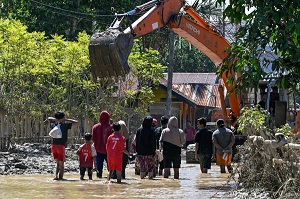 Race to get aid to Asia flood survivors as toll tops 1,200
-
 Pope Leo to honor Beirut blast victims with silent prayer at port
-
 Trump optimistic after Ukraine talks as Rubio says 'more work' needed
-
 Turkey's Erdogan calls Black Sea drone strikes a 'worrying escalation'