- Last Update26-Oct-2026


- Tweet
-
Beyond the Karak attack: Takfiri threat amid regional turmoil - By Ahmad Abdulbaset Rjoub, The Jordan Times
The attack targeting mourners during a funeral at a church in Karak was more than an isolated act of violence. It raised serious concerns about the extremist threats facing Jordan amid regional instability, transnational radical ideologies and changing patterns of terrorism.
Beyond its human toll, the attack carries profound symbolic implications. Targeting a religious gathering threatens Jordan’s longstanding Muslim-Christian unity and seeks to undermine public confidence in national security institutions.
The central question, therefore, extends beyond the perpetrators’ identities to the ideology motivating their actions and its possible connections to extremist networks operating across the region.
Takfiri extremism represents more than ideological radicalisation. It is a worldview that rejects pluralism, challenges state legitimacy and justifies violence through distorted religious interpretations.
Its danger lies in its ability to inspire violence without direct organisational command. Contemporary terrorism increasingly involves individuals or small cells radicalised through digital propaganda rather than traditional hierarchical networks.
Jordan must consequently strengthen preventive intelligence capabilities while carefully distinguishing legitimate religious expression from violent extremist ideology.
Attacking church gatherings strikes at a defining pillar of Jordanian identity: Religious coexistence.
Jordanian Christians are rooted in the Kingdom’s national development, institutions and collective security. Violence targeting them threatens not only a religious community but the broader principles of citizenship and national solidarity.
Extremist organisations exploit sectarian tensions to fragment societies, weaken institutions and undermine stability.
Protecting religious coexistence must therefore remain a national security priority, not merely a social or religious obligation.
Jordan’s security challenges cannot be separated from its geopolitical environment.
In Syria, shifting political and security conditions may create opportunities for extremist networks to reorganise. Iraq’s experience with Daesh demonstrates that military defeat does not necessarily eliminate radical ideology, recruitment structures or clandestine financing.
Meanwhile, the continuing Palestinian conflict and associated humanitarian suffering may be exploited by extremist propagandists seeking recruitment opportunities.
A fundamental distinction must nevertheless be maintained between the Palestinian people’s legitimate national rights and attempts to manipulate their cause to justify terrorism.
Jordan consequently faces two interconnected challenges: Potential external security infiltration and domestic radicalisation through digital ideological influence.
Neither possibility, however, establishes that the Karak attack was externally directed. Such conclusions require credible investigative evidence.
Is Jordan’s national model the target?
Takfiri ideology fundamentally opposes the modern nation-state, religious diversity and the rule of law.
Jordan’s regional diplomatic role, counterterrorism commitments and established tradition of religious coexistence stand in direct contradiction to extremist ambitions.
Terrorist violence may therefore pursue objectives beyond immediate casualties: weakening institutional credibility, provoking social divisions, exhausting security resources and creating perceptions of instability.
Nevertheless, determining the perpetrators’ actual motives and possible organisational affiliations must remain the responsibility of competent investigative authorities.
Jordan possesses substantial counterterrorism and intelligence experience. Yet evolving threats require a comprehensive strategy integrating security preparedness, ideological prevention and societal resilience.
Priorities include strengthening early-warning systems, identifying terrorist recruitment networks, combating illicit financing and expanding regional intelligence cooperation within established legal frameworks.
Equally important are youth engagement, credible religious discourse, civic education and public confidence in state institutions.
Addressing social exclusion and economic vulnerabilities may also reduce opportunities for extremist exploitation, without suggesting any automatic relationship between poverty and terrorism.
Strategic communication is another essential component. Terrorist violence seeks to spread fear, misinformation and mistrust.
An effective national response must reject collective blame, discourage inflammatory narratives and reaffirm that Jordanians, regardless of religious affiliation, share equal citizenship and a common national destiny.
Assessing future risks
Three broad scenarios merit consideration.
The first involves containing an isolated incident without wider organisational consequences. The second concerns recurring attacks by self-radicalised individuals. The third involves identifying transnational extremist connections requiring deeper regional security cooperation.
No scenario should be treated as established without reliable intelligence and verified evidence.
Nevertheless, preparedness across all three possibilities remains essential to responsible national security planning.
The Karak attack underscores a fundamental reality: combating terrorism requires confronting not only perpetrators but also the ideology that legitimises violence against innocent civilians.
Jordan’s strength rests on effective institutions, professional security services, the rule of law and a cohesive society.
Despite regional turbulence, the Kingdom possesses the institutional experience and national solidarity necessary to confront emerging threats.
Borders protect territory, institutions safeguard the state, but national unity protects society against internal fragmentation.
Ultimately, the most meaningful response to terrorism is not simply bringing perpetrators to justice, but preventing their violence from achieving its intended political and social consequences.
Jordan’s enduring victory lies in preserving a strong state, a united society and a national identity resistant to extremism and division.
The writer is a strategic researcher and planner.
Latest News
-
 Seven martyred, 40 treated after attack on church in Karak — ministers
-
 Six martyrs, 28 injured in Karak attack — PSD
-
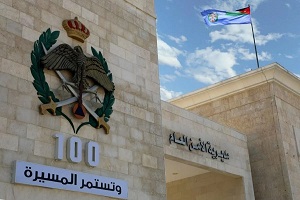 Interior, health ministers visit Karak following crime, press conference set for 5:30pm
-
 King says terrorist attack against Karak will be met with ‘harshest retaliation’
-
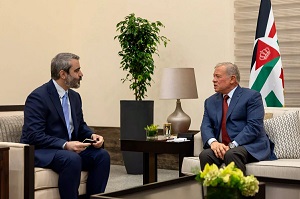 King receives Syria FM