- Last Update03-Aug-2026


- Tweet
-
The war’s next phase: Reconfiguring Iran from within - By Amer Al Sabaileh, The Jordan Times
The war with Iran has entered a new phase that is shaping change from within Iran itself. Tehran’s response came as a militarily unbalanced reaction and relied mainly on two instruments, disrupting navigation in the Strait of Hormuz and expanding regional instability, has gradually begun to lose much of its effectiveness.
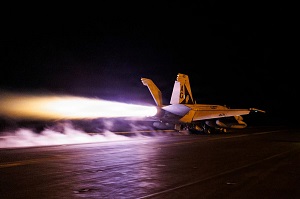
The United States has responded to the maritime threat by targeting Iranian capabilities along the coast and striking supply centres, reducing Tehran’s ability to transform the Strait of Hormuz into a sustainable strategic pressure tool.
Meanwhile, Iran’s strategy of targeting Gulf states and Jordan has gradually focused on Kuwait and Bahrain. However, despite its seriousness, this escalation does not represent a real shift in the military balance. Rather, it reflects Tehran’s determination to preserve whatever pressure tools remain available in the face of the US strategy of “containment of containment.”
This strategy has focused on taking the initiative away from Tehran and placing the decision to escalate or halt military operations largely in Washington’s hands, significantly narrowing the space to manoeuvre that Iran relied on for years.
With Iranian influence in Lebanon gradually declining, Tehran has moved toward seeking alternative arenas to compensate for its losses. In this context, the Houthis have returned to the forefront through threats against Saudi Arabia and maritime navigation in the Bab al-Mandab Strait.
This represents an attempt to compensate for Iran’s declining ability to threaten Hormuz, because combining pressure on Bab al-Mandab and Hormuz would increase the cost of global trade and energy markets, potentially creating an international economic crisis that would become increasingly difficult to contain if prolonged.
From this perspective, Saudi Arabia’s move to gather more than forty countries to discuss an international framework for protecting maritime routes and energy infrastructure can be seen as the beginning of a new approach aimed at overcoming international paralysis and moving toward a more effective mechanism for safeguarding strategic maritime corridors.
Iran’s other instrument lies in the armed groups that have begun appearing in Iraq under sometimes unclear organisational structures following the decline of traditional militias. These formations have focused their activities on targeting Gulf states and Jordan, attempting to provide Iran with political deniability while compensating for the declining effectiveness of the fronts it previously relied upon to spread regional instability.
Although the identities and roles of these groups have become increasingly known through intelligence channels, their continued use will contribute to a new regional equation based on rejecting the model of the “militia and the state within the state.” As the scope of targeting expands, the region appears to be moving toward a more decisive approach toward these organisations, even if that requires direct military options.
At the same time, the United States appears committed to a carefully calibrated escalation strategy, moving toward deeper levels of pressure while maintaining market stability, preventing uncontrolled energy price increases, and avoiding a wider regional war.
However, the broader objective goes beyond exhausting Iran’s military capabilities. It increasingly aims at reshaping the internal balance of power within Iran itself, through possible targeting of energy facilities, infrastructure linked to the nuclear programme, centres of influence, or key figures within the decision-making structure.
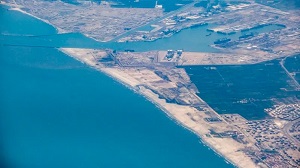
In this context, the targeting of Damietta in Egypt can be seen as a message confirming that pressure on energy-related infrastructure is no longer limited to the Gulf but has expanded into the Eastern Mediterranean, reflecting an attempt to widen pressure on global energy markets and increase the political and economic costs of the conflict.
Despite the escalation of Iranian rhetoric, Tehran’s operational space continues to shrink, pushing it to rely more heavily on proxy networks. Yet weakening Iran’s internal capabilities and centres of influence simultaneously reduces the role of these proxies, as they remain a central component of the influence structure now being dismantled.
The region is therefore entering a different phase of escalation. The central question is no longer whether Iran can increase the cost of war, but whether it can prevent the confrontation from moving beyond the erosion of its external tools toward a deeper reshaping of its political and security environment at home.
As Iran’s external instruments of influence continue to weaken, the regime’s central challenge becomes preserving internal cohesion. This makes the current phase the beginning of a broader process of redrawing the balance of power inside Iran and across the region.