- Last Update11-Apr-2026


- Tweet
-
Pakistan PM says US, Iran leadership both attending Islamabad talks
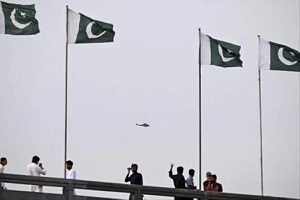
AFP
Islamabad, Pakistan — Pakistani Prime Minister Shehbaz Sharif said Friday that leaders of both Iran and the United States would attend ceasefire talks in his country -- and warned that progress would be hard work.
"In response to my sincere invitation, the leaderships of both countries are coming to Islamabad. There, negotiations will be held for the establishment of peace", Sharif said in an address to the nation.
While US Vice President JD Vance was on his way to Pakistan, there had been a question mark over the Iran delegation after Tehran set conditions for the start of negotiations.
The Islamic republic has said a two-week ceasefire in place must apply to Lebanon, where Israel was still carrying out bombing raids on Iran-backed Hezbollah.
Iran also called for its assets frozen abroad because of US sanctions to be unblocked.
Sharif sounded a more positive note, thanking both sides for agreeing to meet, but said the hard work was still to come.
"A temporary ceasefire has been announced, but now an even more difficult stage lies ahead: the stage of achieving a lasting ceasefire, of resolving complicated issues through negotiations," he said in his televised speech.
"This is that stage which, in English, is called the equivalent of 'make or break'."
He said his government would "make every possible effort to make these talks successful".
Iran demanded a truce in Lebanon and the release of its blocked assets on Friday as US Vice President JD Vance warned Tehran not to "play" Washington, casting doubt on planned ceasefire talks in Pakistan.
Despite the temporary truce struck between the foes, deep disagreements remain as to the way forward in negotiations aimed at transforming the fragile ceasefire into a lasting peace deal.
"If the Iranians are willing to negotiate in good faith, we're certainly willing to extend the open hand," Vance told reporters before taking off for Pakistani capital Islamabad from Joint Base Andrews in Maryland.
But "if they're going to try to play us, then they're going to find the negotiating team is not that receptive", he said.
Iran's parliament speaker shortly thereafter put forward two measures he said "must be fulfilled before negotiations begin": a ceasefire in Lebanon and the release of Iran's blocked assets.
Both had been "mutually agreed upon between the parties" but had "yet to be implemented", Mohammad Bagher Ghalibaf wrote on X.
Official sources say the talks in Islamabad will cover several sensitive points, including Iran's nuclear enrichment and the free flow of trade through the Strait of Hormuz.
Since the ceasefire took effect, US President Donald Trump has voiced displeasure at Iran's handling of the strategic strait, which was meant to be reopened, while Tehran has reacted angrily to Israeli attacks in Lebanon, insisting that it too falls under the agreement.
Trump posted on his Truth Social network on Friday that Iran has "no cards" in the talks "other than a short-term extortion of the World by using International Waterways".
While Pakistan had said the discussions would start on Friday, Vance is not expected to arrive until Saturday.
In Islamabad all routes leading to the Serena Hotel, the expected venue for the talks, were blocked off with heavy security, while a large banner and digital signs along the expressway heralded the "Islamabad Talks".
‘Pure noise'
One 30-year-old resident of Tehran told AFP he was sceptical negotiations would be successful, describing most of what Trump says as "pure noise and nonsense".
"He wants to manipulate the Islamic republic into getting a deal. I think that was his intention, if you can say there is an intention."
A fifth of the world's oil and vast quantities of natural gas and fertiliser pass through the Strait of Hormuz in peacetime, but only a small number of vessels have crossed since the truce was announced earlier this week.
The two-week ceasefire was agreed to allow time for negotiations aimed at ending a conflict that has already killed thousands and plunged the global economy into turmoil.
"I am scared of the war starting again, and at the same time I'm scared of the regime staying", Tehran resident Sheida told AFP, withholding her last name out of concern for her safety.
Latest News
-
 Iran announces alternative routes in Hormuz strait
-
 King to former PMs, officials: Jordan is safe and will remain so
-
 Safadi, Palestinian vice president call for 'urgent' aid delivery, adherence to Gaza ceasefire
-
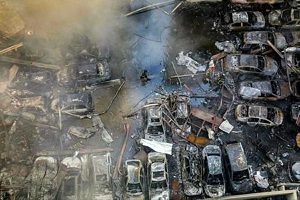 Death toll from Israeli strikes on Lebanon rises to 182 - ministry
-
 Prime minister condemns Israeli aggression, reiterates full support for Lebanon