- Last Update13-Feb-2026


- Tweet
-
Daesh attempts to assassinate Syrian president, senior officials – UN report
AFP
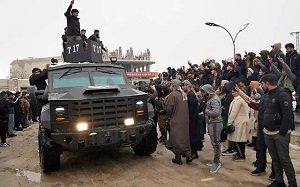
AMMAN — A United Nations report says that Syria's senior officials, including interim President Ahmed Al Sharaa, were the targets of five foiled assassination attempts by the Daesh terror group.
According to the UN Secretary-General’s latest strategic report on the global threat posed by the Daesh terror group, also referred to as ISIS and ISIL, the extremist organisation has attempted to assassinate multiple Syrian officials, including President Al Sharaa, while noting that the interim Syrian government joined the US-led coalition against ISIL in November 2025.
On 24 December 2025, Syrian officials claimed that they had captured a key Daesh leader near Damascus, the report, circulated to UN Security Council members on 31 January, said.
The report said that Daesh has continued to operate across Syria, including by carrying out attacks in the north and north-east parts of the country.
In mid-December 2025, Syrian and US officials said that Daesh was responsible for an attack by a lone gunman in Palmyra in central Syria that killed three US personnel. In response, the US has carried out a series of airstrikes in Syria targeting Daesh infrastructure, weapons sites, and personnel, including a strike that killed a “leader affiliated with Al Qaida who had direct ties to a [Daesh] terrorist” responsible for the mid-December 2025 attack, the report said.
The Secretary-General’s report estimates that Daesh has maintained approximately 3,000 fighters in Iraq and Syria and says that the group has sought to incite sectarian tensions in an effort to undermine the Syrian authorities.
The humanitarian and human rights situation in the detention camps holding Daesh fighters and women and children associated with them in northeastern Syria remains a pressing concern.
According to the Secretary-General’s report, over 25,740 people, more than 60 per cent of whom are children, are currently living in the Hawl and Rawj camps. It notes that humanitarian assistance has been severely limited by reductions in foreign aid and says that the living conditions in the camps have remained dire, with limited services, inadequate shelter, and high risks of violence, including sexual and gender-based violence.
Reiterating previous concerns raised by the Secretary-General, the report warns that the camps are fertile grounds for exploitation and radicalisation by terrorist groups and repeats the call for member states with nationals in the camps to facilitate their safe, voluntary, and dignified repatriation.
The report said that Daesh continues to exploit armed conflict, political instability, and weak governance and stresses that the group remains a threat to human rights and development, as well as to international peace and security more broadly.
The Secretary-General’s report also highlights the threat posed by the group in Iraq and the Levant-Khorasan (ISIL-K), noting that the affiliate is active in northern Afghanistan and in areas near the border with Pakistan.
According to the report, ISIL-K has retained potent operational capability and demonstrated continuing intent to conduct operations both regionally and internationally. On 19 January, ISIL-K carried out an attack in Kabul, which killed six Afghans and one Chinese national. Council members condemned the attack in a 21 January press statement.
According to the report, the situation is particularly serious in Africa.
It report says that Daesh affiliates, including in Sahel (ISSP) and in West Africa (ISWAP), are asserting control over vast areas, leading to significant casualties, large-scale displacements, loss of livelihoods, and ongoing interruptions of humanitarian assistance.
In the Lake Chad Basin, the report said that ISWAP became more prominent, entrenching its positions across the central and southern areas of Borno State in northeastern Nigeria and intensifying raids against isolated communities in northern Cameroon and western Chad.
The Daesh affiliate in the Greater Sahara (ISGS) has remained active in Niger, targeting security forces and civilians, the report said.
Daesh claimed responsibility for a 28 January attack on Niger’s main airport in Niamey, which was reportedly repelled by Nigerien armed forces with assistance from Russian troops. Given the seriousness of the situation in the region, the Secretary-General’s report highlights the need for regional member states to forge unified responses to challenges they face.
In Somalia, the threat posed by Daesh was significantly reduced as a result of counter-terrorism operations conducted by national security forces working with regional and international partners, the report said.
Daesh in Somalia is estimated to have approximately 200-300 fighters, many of whom were killed or arrested during counter-terrorism operations. In late January, Somalia and the US carried out a series of airstrikes targeting Daesh’s Somali affiliate.
In the Democratic Republic of the Congo, the Daesh-affiliated Allied Democratic Forces (ADF) has continued to pose a substantial threat, while it has increased its propaganda coverage of attacks in both the DRC and Mozambique, according to the report.
Latest News
-
 Lebanon-Israel talks open amid widening gap between diplomacy, war
-
 King reviews government progress in public sector modernisation
-
 US-Iran talks fail, raising fears of renewed escalation
-
 Trump warns Iran boats breaching US blockade will be 'eliminated'
-
 Jordan, Syria deepen strategic ties at high-level council meeting in Amman