- Last Update26-Apr-2026


- Tweet
-
A War on Pause, a state under pressure - By Amer Al Sabaileh, The Jordan Times
From the very first moment the U.S.–Israeli war against Iran erupted, Tehran’s objective was not to achieve a conventional military victory, but to manage and raise the cost of the conflict on the global economy and the regional environment, forcing a halt to the war rather than bringing it to a decisive end. What Iran failed to grasp early on, however, is that the very nature of the conflict itself was being redefined, the goal was no longer to break Iran militarily, but to reshape it politically from within.
Over nearly forty days of sustained strikes, Iran’s industrial, defensive, and military infrastructure absorbed significant damage, extending to senior security leadership and internal decision-making centers. Within this context, the shift toward negotiations emerged as an Iranian attempt to consolidate a “cessation of war” and contain any impending comprehensive destruction repeatedly signaled by Donald Trump, rather than as a pathway to a final settlement.
Yet this transition was far from smooth. It coincided with a state of internal disorientation reflecting multiple competing centers of power, a decline in the presence of a decisive authority, and growing indications of an absence at the core of decision-making. More critically, even the symbolic role expected of the Supreme Leader, as the ultimate religious and political authority embodying the doctrine of the “Hidden Imam” appeared increasingly constrained.
This environment produced an unprecedented political vacuum. Rather than collapsing the system, however, it led to its reconfiguration, a structure that maintains its institutional form outwardly, while power shifts, rapidly and substantively, toward the Islamic Revolutionary Guard Corps, which now holds the decisive levers of authority at a highly sensitive moment.
In parallel, the crisis moved from its security dimension into a political one, raising a fundamental question, who controls the decision to negotiate, who defines the limits of concession, and who has the authority to conclude deals? In practice, the absence of clear answers led to paralysis and stagnation, exposing the system’s inability to produce a unified strategic decision.
This stagnation, however, did not create a vacuum. Instead, it triggered a different American response. Rather than sustaining direct confrontation, Washington shifted toward a strategy of pressure and containment, targeting Iranian ports and restricting their operational capacity. This approach does not merely aim at the economy; it transfers the conflict into Iran’s domestic arena across all levels, political, economic, social, and security, creating conditions for internal fragility, gradual erosion, and expanded intelligence penetration.
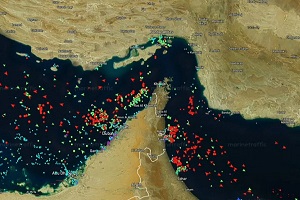
At the same time, halting the war effectively neutralized one of Iran’s most important tools of leverage, its ability to threaten the regional periphery. This significantly reduced pressure on the United States while redistributing it inward, toward Iran itself. Simultaneously, the Strait of Hormuz was internationalized, transforming it from an Iranian pressure card into a global issue governed by major power dynamics rather than Tehran’s unilateral decision.
Domestically, official discourse has increasingly emphasized “national unity” in an effort to absorb the effects of financial strangulation resulting from sanctions and pressure, measures imposed at relatively low cost to the United States. Meanwhile, indicators of U.S.–Israeli preparedness are intensifying, not for a return to direct war, but for a more complex phase centered on weakening the domestic front and preparing conditions for high-impact, targeted operations.
Herein lies the central paradox: the cessation of war, which Iran sought as an achievement, has turned into an instrument against it. The obstacles delaying any agreement, whether related to the nuclear file, uranium transfer, or ballistic and drone capabilities, are no longer the core issue, they have become its outer layer. The deeper reality is that the conflict is no longer aimed at altering Iranian behavior, but at redefining the very nature of the regime itself.
Accordingly, the combination of halting the war and imposing pressure does not represent a transitional phase, it constitutes, in essence, the failure of Iran’s original strategy. What is unfolding may lead to a profound political crisis and a complex economic breakdown that will be difficult to contain, alongside the likelihood of escalating high-impact operations inside Iran, and potentially a wave of targeted assassinations against actors who continue to obstruct a transition toward settlement.
In the coming months, the effects of this strategy may not be most visible in external balances of power, but rather in the evolving shape of the conflict within Iran itself, where accumulated pressures could become a decisive force in reshaping the internal landscape. Ultimately, the battle is no longer about ending the war, but about redefining it. The “cessation” of war is no longer its conclusion, it is the beginning of a quieter phase in form, but far deeper and more consequential in substance.
Latest News
-
 Crown Prince meets France president on margins of EU meeting in Cyprus
-
 Lebanon-Israel Ceasefire Extended by 3 Weeks after White House Meeting
-
 Trump says US in no rush but 'clock is ticking' for Iran
-
 Lebanon meets Israel in Washington to request truce extension
-
 Clearing Hormuz Strait mines could take six months: report