- Last Update08-Feb-2026


- Tweet
-
37 Palestinian children killed in Gaza since start of year - UNICEF
The Jordan Times
AMMAN — The United Nations Children’s Fund (UNICEF) has warned that conditions in the Gaza Strip remain extremely fragile and deadly for children, despite the ongoing ceasefire.
UNICEF said children in Gaza continue to suffer from airstrikes while facing the collapse of health, water, and education systems.
Reports indicate that Israeli attacks have killed at least 37 children across the Strip since the beginning of the year.
The UN agency stressed that the ceasefire must hold if the suffering of Gaza’s children is to end. It warned that any return to full-scale violence would further endanger a generation already marked by trauma, displacement, and loss.
Last month, UNICEF reported that at least 100 children were killed in Gaza by Israeli airstrikes and other acts of violence since the ceasefire began three months ago.
Speaking to journalists in Geneva, UNICEF spokesperson James Elder said that more than 100 children have been killed in Gaza since the ceasefire took effect in early October. He described the toll as the equivalent of one child killed almost every day during a period meant to offer protection.
Elder said the victims included 60 boys and 40 girls. Israeli forces killed them through airstrikes, drone attacks, some of them suicide drones, tank shelling, and live ammunition. He warned that the real number of child deaths is likely higher than reported.
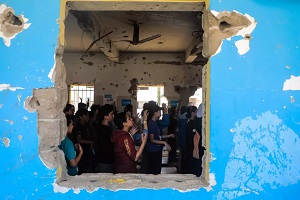
UNICEF also highlighted the devastating impact of the war on education in Gaza. Elder said nearly two and a half years of attacks on schools have placed an entire generation at risk.
Since the genocide began, damage or destruction has affected around 90 per cent of schools in Gaza. More than 700,000 school-age children have lost access to formal education, leaving many without safe learning spaces or basic educational support.
In response, UNICEF has launched a large-scale campaign to return hundreds of thousands of children to learning environments across the Israeli-destroyed Strip.
Elder described UNICEF’s current education response in Gaza as one of the largest emergency education initiatives in the world.
The organisation said it supports more than 135,000 children through education programs operating in over 110 learning centers. Many of these centers function inside tents due to widespread destruction of school buildings.
UNICEF plans to significantly expand the initiative. The agency aims to reach more than 336,000 children by the end of this year, covering roughly half of Gaza’s school-age population. It also plans to return all school-age children to in-person education by 2027.
Before the war, UNRWA provided education to nearly half of Gaza’s children.
UNICEF warned that education alone cannot protect children without sustained calm. The agency renewed its call for an enduring ceasefire, accountability for violations, and immediate measures to safeguard Gaza’s children from further harm.