- Last Update14-Aug-2026


- Tweet
-
ARABOSAI marks 50 years of advancing Arab audit work in Jordan
The Jordan Times
AMMAN — The Audit Bureau on Thursday hosted the Golden Jubilee celebration of the Arab Organisation of Supreme Audit Institutions (ARABOSAI), marking 50 years of joint Arab auditing work and highlighting the need to modernise oversight in response to rapid technological and economic changes.
The celebration is held under the patronage of Justice Minister Bassam Talhouni and themed “Towards a Brighter Audit Future: 50 Years of Giving”, the event brought together heads and delegations of Arab supreme audit institutions, ministers, ambassadors, representatives of regional and international organisations and audit experts.
Audit Bureau President Radhi Al Hamadeen said Jordan’s hosting of the event reflects its commitment to joint Arab institutional action and ARABOSAI’s role in strengthening cooperation, exchanging expertise and advancing auditing practices.
He highlighted the bureau’s efforts to modernise its oversight work under its 2024-2027 strategic plan through digital transformation, risk-based auditing, data analysis, human resources development and the adoption of modern technologies.
Al Hamadeen stressed the importance of moving beyond traditional oversight focused on detecting shortcomings after they occur towards a more proactive approach that anticipates risks, analyses trends and helps prevent recurring deficiencies.
Chair of ARABOSAI’s Executive Council and President of Saudi Arabia’s General Court of Audit Hussam bin Abdulmohsen Alangari described the anniversary as an opportunity to reflect on five decades of joint Arab auditing work and chart the organisation’s future.
He stressed the need to continuously develop oversight methodologies and technologies in response to growing challenges related to governance, cybersecurity, sustainability and financial and economic risks.
Artificial intelligence featured prominently in discussions on the future of auditing, with President of Egypt’s Accountability State Authority and Chair of the International Organisation of Supreme Audit Institutions (INTOSAI) Mohamed El Faisal Youssef highlighting its potential to transform audit and oversight work.
“Artificial intelligence has now become part of the reality of audit and oversight work,” Youssef said, noting that it offers new opportunities to analyse large volumes of data, identify unusual patterns, improve risk assessment and enhance audit efficiency.
However, he stressed that the value of AI lies not simply in adopting advanced technologies, but in using them responsibly within a professional framework based on accountability, transparency, data protection and cybersecurity.
“The real measure lies in how well these technologies are integrated into a professional system based on clear standards,” he said, stressing that professional responsibility and final audit decisions must remain in human hands.
Youssef called for common Arab frameworks to govern the use of AI applications in audit work and ensure their safe and effective use.
Beyond technology, he said the future of auditing depends on investing in human resources, strengthening professional knowledge and expanding international cooperation.
“Challenges that cross national borders can only be addressed through effective partnerships, knowledge sharing and sustainable institutional coordination,” he said, adding that “the strength of Arab audit work comes from bringing together the efforts of Supreme Audit Institutions across the Arab world”.
Meanwhile, Fadila Al Qarqouri, judge at the Tunisian Court of Accounts and ARABOSAI secretary-general, told The Jordan Times that the organisation has played a central role in supporting Arab supreme audit institutions since its establishment in 1976.
Today, ARABOSAI brings together 22 Arab audit institutions and serves as a platform for sharing knowledge, exchanging expertise and developing professional guides and methodologies.
“Our role is centred on sharing knowledge, exchanging experiences and producing professional publications,” Al Qarqouri said. “All these efforts serve one main objective: strengthening the capacities of Supreme Audit Institutions so they can keep pace with the rapid changes in the environment in which they operate.”
She noted that audit institutions face an increasingly complex environment shaped by technological developments, artificial intelligence and environmental and climate-related challenges.
“The key question is how we can prepare our audit institutions to conduct effective oversight and provide meaningful support to government institutions,” she said.
Al Qarqouri stressed that strengthening audit institutions ultimately aims to protect public funds, promote transparency and reinforce accountability.
“This can only be achieved through strong and capable Arab audit institutions, supported by qualified professionals and equipped with modern tools and methods,” she said.
Participants affirmed the importance of building ARABOSAI’s achievements by strengthening cooperation, developing professional capacities and harnessing modern technologies to improve audit practices and public sector governance.
Established in 1976, ARABOSAI serves as a framework for professional cooperation among Arab supreme audit institutions, facilitating knowledge exchange, capacity building and the continued development of auditing practices.
Latest News
-
 Iranian Official: No Discussions with U.S. Regarding Ceasefire Extension
-
 F-16 Fighter Jet Crashes During Training Mission in Turkey, Pilot Survives
-
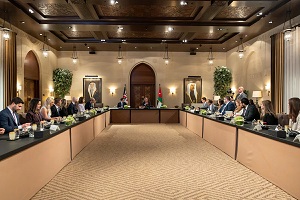 King receives US Congress staffers
-
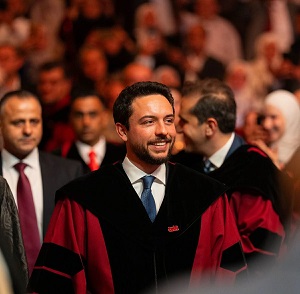 Crown Prince attends graduation ceremony of Al Hussein Technical University’s sixth cohort
-
 Royal Decree approves reshuffle of PM Hassan’s Cabinet