- Last Update04-Oct-2026


- Tweet
-
Echoes of 1939: Is the world heading towards World War III? - By Hasan Dajah, The Jordan Times
World wars do not necessarily begin with a formal declaration of hostilities; rather, they often take shape through scattered conflicts, rival alliances and miscalculations regarding the limits of power. This is how the precursors to World War II accumulated-from the occupation of Manchuria in 1931 and the invasion of Ethiopia in 1935 to the dismantling of Czechoslovakia and, ultimately, the invasion of Poland on September 1, 1939. Today, the combination of simultaneous wars, an accelerating arms race and eroding confidence in security guarantees raises a serious question: Is the world witnessing the prelude to a similar explosion, or does it possess the tools to prevent a recurrence of such a catastrophe?
The deepest parallel lies in the erosion of constraints on the use of force and the inability of international institutions to enforce a level playing field. In the 1930s, successive violations and the hesitation of major powers fostered the belief that further gains could be achieved without triggering an all-out confrontation. Today, limited wars may generate a similar logic: Each side tests its adversaries, interprets restraint as weakness, and believes it can control the ladder of escalation. However, similarity does not imply identical circumstances; nuclear deterrence and economic interdependence raise the cost of direct warfare, even if they do not eliminate the possibility of miscalculation.
The Russian military operation in Ukraine-ongoing since the invasion on February 24, 2022-represents one of the most dangerous arenas for this test. The ongoing war of attrition, Western support for Kyiv, and reciprocal attacks raise concerns about how close the situation is to escalating from a regional conflict into a direct clash between Russia and NATO. A shift towards a broader confrontation does not require a premeditated decision to invade another state; it could be triggered by a cross-border strike, the accidental targeting of foreign troops or the misinterpretation of a military warning- after which calculations regarding credibility and deterrence drive the conflict’s expansion.
Separately, the US operation in Venezuela-which culminated in the capture of Nicolás Maduro on January 3, 2026-set a new precedent for the use of force within a sovereign state. Its impact extends beyond Latin America, potentially reinforcing the perception among rival powers that the international arena is governed by spheres of influence where the dominant power can impose political arrangements by force. This is an analytical assessment of the operation’s repercussions, not evidence of an international agreement to carve up the world.
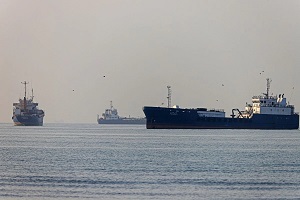
As for the US-Israeli war against Iran, it affects a region where energy resources, maritime corridors and military bases intersect. While China and Russia have rejected the attacks and called for their cessation, such political opposition does not automatically translate into a commitment to go to war in defence of Tehran. Beijing and Moscow must balance their ties with Iran against their interests in the Gulf and the risks of a clash with Washington. The threshold of greatest danger is crossed when political or material support escalates into direct combat between the forces of major powers.
Furthermore, Israeli attacks on Lebanon and Syria add a dangerous dimension to the escalating situation; Raids, incursions, and violations of sovereignty undermine prospects for stability and pave the way for reciprocal responses that transcend the borders of the two states. The continued imposition of facts on the ground by force-coupled with limited international deterrence-invites comparisons to the prelude to World War II, when leniency toward military expansionism emboldened further aggression. Furthermore, given the intertwined interests of Iran, Turkey, Russia and the United States, these arenas could transform into flashpoints that draw additional parties into a broader regional confrontation.
Houthi attacks on Saudi Arabia and maritime traffic-backed by Iranian support-reveal another imbalance in the regional security architecture. However, characterising the US stance as one of absolute silence requires nuance; recent reports indicate that the US is providing intelligence and advisory support to Saudi Arabia, even if direct involvement remains limited. Consequently, the strategic challenge lies in the gap between expectations of protection and the limits of US commitment, a disparity that drives Riyadh to diversify its partnerships and bolster its own autonomous deterrence capabilities.
It is against this backdrop that the Mecca Joint Defence Agreement between Saudi Arabia, Turkey, and Pakistan was signed on August 7, 2026. Meanwhile, security and economic ties are developing between Israel and certain Arab states within the framework of the Abraham Accords. Yet, it would be inaccurate to reduce the landscape to two monolithic, opposing blocs; the Mecca Agreement emphasizes deterrence and stability, while normalisation ties do not, in themselves, constitute a comprehensive Arab-Israeli defence treaty. Rather, the rivalry stems from differing definitions of threats, the scope of Israel’s role, relations with Iran, and the future of the Palestinian cause. Risks are compounded when these disparities intersect with economic shocks. Rising fuel prices, increased transportation, and insurance costs spill over into the food and industrial sectors, straining purchasing power and national budgets. In its July 2026 update, the International Monetary Fund projected that growth in the Middle East and Central Asia would slow to 0.7 per cent for the year, with significant variation among countries. While inflation does not automatically lead to war, it narrows government options, fuels social unrest, and increases the temptation to blame external adversaries for crises.
Pinpointing the exact moment of a "major explosion" is impossible with certainty; however, for the purpose of foresight, the timeline can be divided into conditional windows: October-December 2026, to monitor the potential expansion of the conflict involving Iran and disruptions to maritime navigation; 2027, to test the cohesion of new defense arrangements and the likelihood of friction between Russia and NATO; and the 2028-2030 period, to examine the impact of escalating militarisation and the convergence of regional crises. These are analytical frameworks rather than proven predictions or inherently probable dates.
The decisive factor is not the arrival of a specific year, but rather the convergence of direct clashes between major powers, the activation of mutual defense commitments, and the breakdown of de-escalation channels. At that point, scattered conflicts could merge into an interconnected war. Preventing this requires arrangements for maritime and energy security, permanent military communication channels, mutual guarantees of state sovereignty, and a just resolution to the Palestinian issue. The lesson of the 1930s is that allowing crises to accumulate makes containing them later far more costly-and less certain of success.
The writer is professor of strategic studies, Al-Hussein Bin Talal University.