- Last Update22-Sep-2026


- Tweet
-
Israel minister vows to force out all of Gaza City if any Israeli abducted
AFP
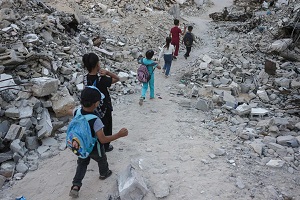
OCCUPIED JERUSALEM — Israel’s defence minister vowed Tuesday to force out all of Gaza City’s residents and displace a million people in the war-ravaged territory if any Israeli is abducted in the future.
Defence minister Israel Katz also threatened the destruction of infrastructure, which, like the forced displacement of civilians, constitutes a war crime under the Geneva Conventions.
“This is the language that the extremist terrorist organisations in Gaza and Lebanon understand, and this is the language we speak -- evacuation of the population, destruction of infrastructure and taking over the territory,” he said, also referring to Lebanese movement Hizbollah.
Gaza City is home to around 1.1 million people, according to the municipality. The entire Gaza Strip has some two million people, who after nearly three years of war have been packed into the 30 per cent of the territory not controlled by Israel.
Israel launched a massive offensive against Gaza that has displaced virtually the entire population at least once and has killed 73,919 people, according to the Gaza health ministry.
Katz, known for his outspoken remarks, recently said that Israel agreed to an October 2025 US-brokered ceasefire declaration only to free the remaining hostages and that he expected Israel, which has kept up strikes at a lower pace, to return to full-scale war in Gaza.
The comments come ahead of October 27 elections in which prime minister Benjamin Netanyahu is facing criticism from the opposition that he failed both to prevent the attack and to deliver military success afterwards.
In his latest remarks, Katz again also threatened to return to war with Iran, whose cleric-run government supports Hamas.
“The work is not yet finished and if we need to, we will strike a third time until the terrorist regime is overthrown and eliminated,” Katz said.
The United States and Israel jointly attacked Iran in late February, with an initial Israeli strike killing supreme leader Ayatollah Ali Khamenei.
Israel reluctantly halted its campaign in April after US President Donald Trump entered a ceasefire and sought a negotiated settlement to the war, which has sharply raised oil prices and been highly unpopular among US voters.
Latest News
-
 King begins working visit to New York for UN General Assembly
-
 Safadi, Czech counterpart sign MoU to institutionalise political consultations
-
 Jordan condemns Houthi missile attack on Riyadh
-
 King holds talks with Czech Republic president in Prague
-
 US approves potential $2.7 bn air defense sale to Ukraine