- Last Update08-Nov-2026


- Tweet
-
A tale of two futures - By Mohammad Abu Rumman, The Jordan Times
“Had it not been for a historical accident that allowed my father to immigrate to Detroit, I would have been a taxi driver in Egypt, like my cousins.” These were the words of Abdulrahman El-Sayed, widely known as Abdul, following his victory in Michigan’s Democratic Senate primary last August. He went on to explain how America had given him access to excellent public schools, a distinguished public university, and the opportunity to study medicine. Those opportunities changed the course of his life, eventually helping propel him to victory in the November midterm elections, making him the first Muslim elected to the United States Senate.
His remarks sparked outrage in Egypt, particularly among media personalities and religious figures associated with the establishment. Some saw his words as an insult to Egypt and its taxi drivers, while others accused him of ingratitude and disowning his roots. Yet El-Sayed had said nothing to demean the profession or those who practice it. He knows and respects his cousins who work as taxi drivers. His point was entirely different: the opportunities that shape human destinies, and the difference between a society that opens doors to the future and one that narrows people's choices, regardless of their talents or ambitions.
El-Sayed's story deserves closer attention. In 2007, a young El-Sayed stood before his fellow graduates at the University of Michigan and delivered a commencement speech about tolerance, coexistence, and overcoming religious divisions. Among those listening was former President Bill Clinton, who was so impressed that he encouraged the young graduate to consider a career in politics. Nearly two decades later, that same young man has been elected to the US Senate, having survived a fierce campaign by President Donald Trump and prominent Republicans who portrayed him as an extremist and accused him of ties to the Muslim Brotherhood.
Consider the irony. Donald Trump is a president before whom leaders and governments tremble. Countries with powerful armies and formidable security establishments hesitate to confront him. Yet a young American of Egyptian descent, commanding neither an army nor weapons nor a security apparatus, dared to challenge him politically and won an election despite his attacks. Where did that confidence come from? What shaped a personality capable of standing up to such power? How did a university student find his way into public life and eventually emerge as a leading figure in a rising progressive movement within the Democratic Party?
We may admire America or strongly oppose its policies. We may fundamentally disagree with Washington over Palestine, wars, and foreign interventions. But we must acknowledge something important: over many decades, American political, social, and educational institutions have created opportunities for large segments of society, particularly young people, to learn, take initiative, volunteer, and participate in politics. They have also opened paths for immigrants and minorities to compete for positions of influence and political power.
This does not mean ignoring the racism, exclusionary right-wing movements, and growing hostility toward minorities under Trump and the MAGA movement. Nor does it mean overlooking the profound contradictions and shortcomings of American democracy itself. But the existence of those contradictions does not erase the opportunities that the system has made possible.
The comparison becomes painful when we ask a simple question: What if Abdul had grown up in one of our Arab countries? Would his school have encouraged him to question his teachers? Would his university have allowed him to develop an independent political identity? Would his family have supported his involvement in public affairs, or would they have feared for his safety and advised him to stay away from politics?
Could he have openly criticized a mayor or a minister, let alone the head of state, without fearing surveillance, prosecution, or imprisonment? Perhaps even his humanitarian work in conflict zones would have been enough to raise suspicions among security agencies, rather than enrich his experience and strengthen his character. Here lies part of the tragedy facing Arab youth. Migration has become a collective dream for many, as we witnessed in the desperate scenes of young people, even children, rushing toward the Spanish enclave of Ceuta in search of opportunities they might never find at home. Europe is no paradise, of course, and migration itself can become another tragedy.
But why do so many young Arabs believe their future lies beyond their own countries? Why do our societies struggle to accommodate their own talents and ambitions, only to express surprise when their brightest minds and most capable young people leave? The question, ultimately, is not whether Abdul might have become a taxi driver or a senator. It is why some societies create opportunities for their young people to shape their own destinies, while others deny them the chance even to try.
Latest News
-
 Crown Prince meets with Estonia PM
-
 Public Security mourns Corporal Jawad Al-Slayta, killed in terrorist knife attack
Al-Ghad
-
 Trump says ‘largely true’ Iran war caused midterms loss, after Vance comments
-
 Crown Prince meets with Estonia president in Tallinn
-
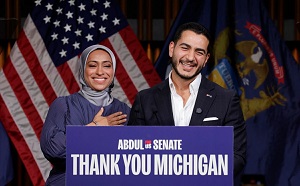 'We did it!': Democrat El Sayed hails US Senate win amid blue 'tsunami'