- Last Update15-Jan-2026


- Tweet
-
The Peace Council and the Technocratic Committee: Crisis management instead of resolution - By Hasan Dajah, The Jordan Times
The so-called “International Peace Council” and the formation of a “Palestinian Technocratic Committee” to manage the Gaza Strip are being revived today as political and administrative solutions to the humanitarian and political catastrophe left by the Israeli war on the Strip since October 7, 2013. However, this proposal, despite its technical and diplomatic language, effectively returns the Palestinian cause to square one, bypassing its core as a national liberation struggle subject to the rules of international law and clear resolutions issued by the United Nations and the Security Council, foremost among them the right of the Palestinians to establish their independent state on the June 4, 1967 borders with East Jerusalem as its capital.
The “Peace Council” is proposed as an international supervisory body led by the United States and comprising heads of state and international figures, tasked with overseeing the reconstruction of Gaza and post-war arrangements. However, the nature of this council, its anticipated composition, and its vague powers indicate that it is not an instrument for implementing international law, but rather a framework for managing the crisis politically and militarily in a way that serves the balance of power among major players, not the rights of the Palestinian people.
The absence of a clear legal framework for the proposed Peace Council — that is, its lack of explicit and binding connection to Security Council resolutions such as 242, 338, 1397, and 1515, and to the General Assembly resolution recognizing the State of Palestine within the 1967 borders — prevents it from being a neutral or technical framework. Instead, it effectively transforms it into a substitute for international legitimacy, not an instrument for its implementation. Rather than serving as a channel for implementing existing legal obligations on the occupying power and the international community, the council is being presented as a new political platform that redefines the problem at its root: from an illegal occupation that must end, to a “conflict” that must be managed.
In this context, reconstruction is transformed from a right of the Palestinian people and redress for the damage resulting from a documented act of aggression into a tool of political pressure conditioned on the Palestinians' own behaviour, primarily disarmament, the restructuring of the internal political system, and the neutralisation of actors who do not conform to the imposed international vision. Thus, the logic of "economic peace" that prevailed in previous phases is reproduced: Improving living conditions under occupation instead of ending it, and managing the consequences of injustice instead of addressing its root causes. This logic has historically proven ineffective in producing peace; rather, it postpones the explosion and deepens the structural imbalance in the relationship between power and rights.
The proposed Palestinian technocratic committee to administer Gaza is presented as a "professional" and neutral solution for managing civil and service affairs in the post-war phase. While many of the proposed names do indeed belong to civil society and professional institutions, the fundamental problem lies not in the competence of the individuals, but in the political framework within which this committee is placed and the role it is intended to play.
The committee is deliberately detached from the Palestinian national political context and presented as a temporary alternative to an elected government or a path to national reconciliation and unity. It is also effectively tied to external international and security oversight, which restricts its independence and dictates its priorities. Herein lies the fundamental danger: The occupation is being transformed from a political and legal issue requiring its end and dismantling into an administrative and humanitarian matter managed through technical committees and aid programmes, thus reproducing the model of “managing a population under occupation” instead of ending the occupation itself.
Even more dangerous is that this approach marginalizes the role of the Palestinian National Authority as the internationally recognised political entity representing the Palestinian people and undermines the possibility of utilizing the transitional phase as a step towards a two-state solution. Instead of strengthening the Authority and unifying its institutions in preparation for establishing an independent Palestinian state within the 1967 borders, it is being bypassed by an administrative committee with limited powers. This transforms the transition from a sovereign, liberation-oriented path to a temporary administrative one with no political horizon. Thus, technocracy transforms from a tool of service to a tool of dismantling politics, and from a means of support to a tool of control, aligning with the occupation's interests in keeping Palestinians in a state of limited self-governance without sovereignty.
One of the plan's core pillars is security arrangements, including the deployment of an international force to monitor disarmament and guarantee "stability." This logic reproduces the Western security approach, which views the conflict from the perspective of "Israeli security", not from the perspective of justice and ending the occupation.
Peace does not begin with disarming the victim, but rather with removing the root cause of the conflict: the occupation, settlements, and the blockade. Making security the primary entry point effectively means entrenching the results of military force as a fait accompli, and then managing its humanitarian consequences.
With over 71,000 martyrs in Gaza, thousands of violations of ceasefire agreements in Gaza and Lebanon, and the continuation of the aggression and the blockade, talk of a purely technical "second phase" without political guarantees becomes an illusion. How can be peace built or reconstruction achieved under an occupation that has never adhered to any previous agreement and has never been held accountable by the international community? The Peace Council and the technocratic committee, in their current form, do not constitute a path to resolving the Palestinian issue, but rather a path to managing, postponing and repackaging it. They transform the issue from one of national rights and sovereignty into a humanitarian-security-administrative file managed by the major powers, thus emptying UN resolutions of their binding content.
Instead of the starting point being ending the occupation and implementing international law, the approach becomes conditional reconstruction, restricted administration, and selective internationalisation. This effectively returns the Palestinians to square one: a people managed but not represented, provided with aid but not liberated, and expected to accept an unjust reality instead of changing it.
This is the crux of the crisis in this approach: it seeks to manage the aftermath of the war, not to address the root cause of the war itself.
The author is professor of Strategic Studies at Al-Hussein Bin Talal University
Latest News
-
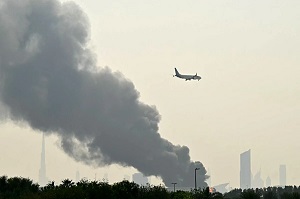 Missile debris kills one in Abu Dhabi as Iran presses Gulf attacks
-
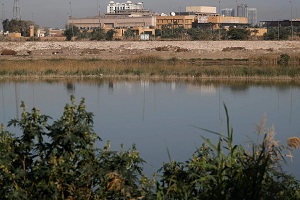 Drone, rocket attack targets US embassy in Baghdad
-
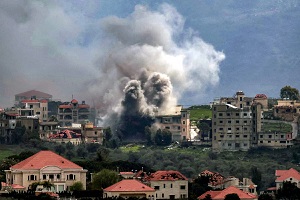 Israel army says begun 'limited targeted ground operations' against Hizbollah in south Lebanon
-
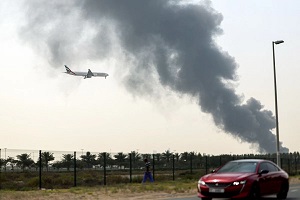 Iran defiant as strikes hit Gulf transport, energy hubs
-
 Western allies push back on Trump call for NATO help to reopen Hormuz