- Last Update14-Jul-2026


- Tweet
-
Russia and China: 30 years of strong partnership and still counting - By Gleb Desyatnikov - Guo Wei, The Jordan Times
On April 25, 1996, Russia and China declared their intention to develop a relationship of equal and trusting partnership aimed at strategic cooperation in the twenty-first century. Five years later, in 2001, the Treaty of Good-Neighborliness, Friendship and Cooperation was signed, enshrining the principles of mutual respect, sovereign equality, consideration of each other’s core interests, and mutually beneficial cooperation. It is precisely these foundations that have enabled Russia–China relations to withstand the test of time and numerous international upheavals.
An important dimension of Russia-China cooperation is their close coordination within multilateral frameworks. Russia and China actively work together within the United Nations, BRICS, the Shanghai Cooperation Organization,the Group of Twenty, the Asia-Pacific Economic Cooperation forum, and other international platforms. A significant contribution to the development of a common Eurasian space was made by the Agreement on Trade and Economic Cooperation between the Eurasian Economic Union and the People’s Republic of China, which entered into force in 2019 and created additional opportunities for the development of trade, investment, transport connectivity, and industrial cooperation across Eurasia. At the same time, Russia and China consistently emphasize that the mechanisms of cooperation they have established are neither exclusive nor bloc-based in nature. On the contrary, they are founded on the principles of openness, mutual respect, and consideration of the interests of all participants, remaining accessible to states that share a commitment to equal dialogue, mutually beneficial development, and the joint search for solutions to contemporary challenges. As President Vladimir Putin of the Russian Federation recently reiterated, “Moscow and Beijing are friends not against anyone, but in pursuit of their own interests.” And President Xi Jinping of the People’s Republic of China, during the joint press conference with President Vladimir Putin in Beijing last month, also reaffirmed that the two countries have always adhered to the treaty’s established principle of non-alliance, non-confrontation and not targeting any third party.
A key pillar of Russia-China cooperation is the convergence of their approaches to international security and state sovereignty. Moscow and Beijing consistently advocate the establishment of a just and sustainable system of international relations based on the Charter of the United Nations, international law, and the sovereign equality of states. Both countries maintain that interference in the internal affairs of sovereign states, the imposition of unilateral sanctions circumventing the UN Security Council, and attempts to ensure one’s own security at the expense of the security of others are unacceptable. In their joint statements, Russia and China consistently reaffirm their mutual support on issues concerning sovereignty, territorial integrity, and the right of every nation to determine its own path of development.
This approach is particularly significant in the context of persistent instability in various regions of the world and reflects the shared commitment of Moscow and Beijing to strengthening international security through dialogue, mutual respect, and consideration of the legitimate interests of all states. The principle of indivisible security and the aspiration to ensure conditions for peaceful economic development are reflected in the complementary initiatives advanced by Russia and China in this sphere. In particular, Moscow and Beijing consistently support an open and non-discriminatory global trading system based on the rules of the World Trade Organization, oppose unilateral restrictive measures, and emphasize the importance of preserving the resilience of global trade and production chains.
The similarity of Russian and Chinese approaches to key issues on the Middle Eastern agenda is equally noteworthy. Moscow and Beijing consistently advocate the settlement of conflicts through political and diplomatic means, strict adherence to international law, and the prevention of further escalation in the region. Both countries underscore the importance of dialogue and negotiations as the only sustainable path toward reducing tensions and ensuring regional stability. With regard to the Palestinian question, Russia and China call for an immediate ceasefire in the Gaza Strip, unhindered humanitarian access for the population, and the achievement of a comprehensive, just, and lasting settlement on the basis of universally recognized principles of international law, including the establishment of an independent Palestinian state founded on the principle of peaceful coexistence.
Intensive contacts at the highest and top levels consolidate the foundation of the Russia-China partnership. In recent years, meetings between President Vladimir Putin and President Xi Jinping have become a regular feature of both the bilateral and international agenda. In 2024–2025 alone, the two leaders met repeatedly in Beijing, Astana, Kazan, and Moscow, setting the principal directions for the further development of cooperation. Equally important are the mechanisms of regular meetings between heads of government, intergovernmental commissions, and interagency consultations covering trade, energy, transport, education, science, and culture. Such a high degree of political dialogue is clear evidence of the profound mutual trust between the two countries and enables the effective advancement of large-scale joint projects both bilaterally and within international platforms.
Today, international relations are undergoing a period of profound transformation. The balance of power in global politics and economics is shifting, new challenges and opportunities are emerging, and the mechanisms of global governance are evolving. Under these circumstances, relationships founded on mutual trust, strategic vision, and the ability to respond jointly to the challenges of the times call for values compatible with the needs of the new era. The Russia–China partnership, tested over decades and resilient amid a rapidly changing world, stands as a vivid example of a new type of major-country relationship.
It is no coincidence that the renowned Tang Dynasty Chinese poet Li Bai wrote, “The mountains and streams separate us far, but two minds made one will not drift apart.” These words aptly capture the contemporary character of Russia-China relations. Despite geographical distances, differences in historical experience, and a complex international environment, Russia and China are united by shared aspirations for peace, development, justice, and mutually beneficial cooperation. It is therefore fair to state with confidence that the partnership between our two countries will continue to serve as an important factor of stability, security, and prosperity not only for our peoples, but also for the international community as a whole.
Gleb Desyatnikov is Russian Ambassador to Jordan. Guo Wei is Chinese Ambassador to Jordan. This article was contributed to The Jordan Times
Latest News
-
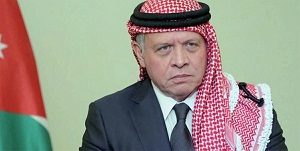 King condoles Qatar over passing of former emir Sheikh Hamad
-
 Three Iranian missiles land in Jordan, cause minor damage — JAF
-
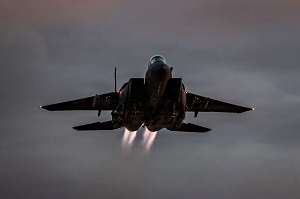 US Attacks Iran, IRGC Says Strait of Hormuz to Remain Closed ‘Until Further Notice’
-
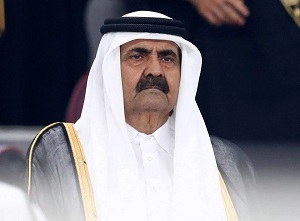 Qatar's Former Ruler Sheikh Hamad bin Khalifa Al Thani Dies
-
 Russian strikes kill six in Ukraine, officials say