- Last Update27-Apr-2026


- Tweet
-
Beyond ownership: Rethinking industrial zones through the sharing economy - By Zaid K. Maaytah, The Jordan Times
In one of Jordan’s industrial zones, a factory line slows to a halt as a shift ends, leaving machines idle until the next morning, a few kilometers away, a young entrepreneur struggles to launch a small manufacturing idea, unable to afford even a fraction of that same equipment, between these two scenes lies a quiet inefficiency, not in what we have, but in how we use it.
We often hear about the “sharing economy” in the context of mobile applications that connect drivers to passengers or homes to travelers, but the idea itself is far broader and far more relevant to economies like Jordan’s, at its heart, it is simply about using what already exists more effectively, instead of each individual or company relying only on what they own, resources are shared, accessed when needed, and used more fully, what appears as a technological trend is, in reality, a different way of organizing economic life.
Seen from this perspective, many of Jordan’s challenges begin to look different, the issue is not always scarcity, but fragmentation, productive capacity exists across sectors, yet it is often underused or locked within isolated systems, this is visible in agriculture, where small landholdings limit efficiency, and in energy, where rooftops and open spaces remain underutilized, the same pattern extends into industry, where access to production remains concentrated despite the presence of significant infrastructure.
International experience shows that sharing models can address this gap, in agriculture, farmers in several countries share machinery, irrigation systems, and storage facilities, allowing them to reduce costs and improve productivity without heavy investment, in energy, community-based solar projects enable households to jointly produce and benefit from renewable power, in both cases, the shift is not about building more, but about coordinating better.
This logic can be extended to Jordan’s Qualified Industrial Zones and development areas, these zones were designed to attract investment and support large-scale production, and they have achieved important results in exports and employment, yet their structure often leaves smaller producers outside the system, while parts of the infrastructure remain underutilized.
Reimagining these zones through a sharing lens offers a different possibility, instead of operating only as clusters of independent factories, they could evolve into platforms where access to production is more flexible, machinery, production lines, storage, and logistics could be made available on a partial or time-based basis, allowing entrepreneurs and small businesses to participate without the burden of full ownership, this would not replace existing industries, but would open the door for wider participation within them.
Such a shift, however, is not only technical, it requires a change in how people perceive ownership, risk and collaboration, many still associate success with full control, while sharing may feel uncertain or less secure, people naturally hesitate when outcomes are unclear, especially when it involves their assets or livelihoods, at the same time, participation tends to grow when examples become visible and when systems feel fair and reliable.
This is why the success of such a model depends on how it is designed, clear rules, transparent pricing, and simple access systems can reduce uncertainty, basic guarantees and protections can build confidence, just as importantly, highlighting successful experiences within these zones can gradually shift perceptions, making shared production feel both practical and acceptable.
For Jordan, this approach aligns closely with its economic realities, capital is limited, but skills, ideas, and ambition are widely available, enabling broader access to existing infrastructure can unlock new forms of productivity without requiring large new investments, it can also create pathways for small producers to move from informal activity into more structured economic participation.
The future of industrial zones may therefore depend not only on how many factories they attract, but on how many people they enable to produce, by moving from closed systems of ownership toward more open systems of access, these zones can become more dynamic, inclusive, and efficient.
In the end, the value of the sharing economy lies in a simple idea, that resources do not need to be expanded before they are better utilized, in a country where every opportunity matters, the ability to share what already exists may be one of the most practical ways to build a more resilient and inclusive economy.
Zaid K.Maaytah — Researcher in Economics and Behavioral Policy
Latest News
-
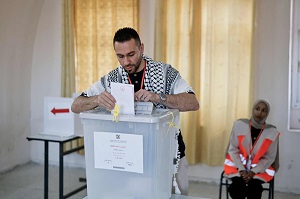 Palestinians vote in first elections since Gaza war
-
 US Envoys Heading to Pakistan for Uncertain Iran Talks
-
 Deputising for King, Crown Prince participates in informal meeting of EU, regional partners
-
 Crown Prince meets France president on margins of EU meeting in Cyprus
-
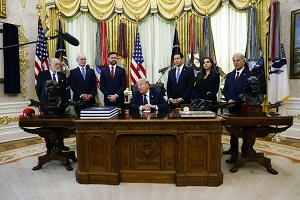 Lebanon-Israel Ceasefire Extended by 3 Weeks after White House Meeting