- Last Update04-Aug-2026


- Tweet
-
Hormuz back in focus as Trump suspends planned strike on Iran

AFP
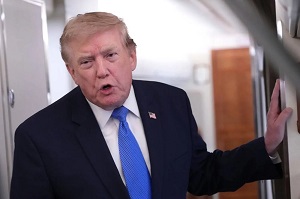
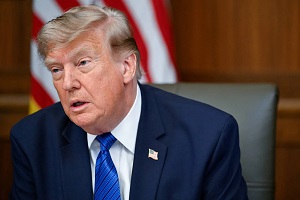
AMMAN — US President Donald Trump announced on Sunday that negotiations with Iran would resume after he suspended a planned military strike, signalling a shift from military escalation to renewed diplomacy following months of tensions.
Speaking aboard Air Force One, Trump said that Washington had been prepared to launch what he described as the largest attack since World War II before deciding to hold off after regional allies urged the United States to give diplomacy another chance.
"Now what we're doing is we're talking to them in the form of a negotiation," Trump said. "It begins tomorrow afternoon [Monday]."
Trump did not disclose where the talks would take place or who would participate, and declined to set a deadline for reaching an agreement.
He said that Saudi Arabia, the United Arab Emirates and Qatar had urged Washington to suspend the planned strikes because they believed a diplomatic solution remained possible.
Trump also said that negotiations will initially focus on the Strait of Hormuz before addressing Iran's nuclear programme.
"There's a deal on Hormuz, and then there will be a deal on the nuclear," he said.
Trump also said that any agreement must include the "immediate, complete and total opening of the Hormuz Strait, and an end to Iran's nuclear threat".
The announcement comes after weeks of renewed hostilities between Washington and Tehran following the collapse of an earlier ceasefire, a conflict that has disrupted regional security and unsettled global energy markets.
The Strait of Hormuz, through which a significant share of the world's oil exports passes, has become a central point of contention after Iran tightened its control over the waterway during the conflict.
Before the war, the strait remained open to international navigation. During the fighting, Iran closed the waterway and has since sought to maintain control while imposing transit fees, a move rejected by the United States.
Meanwhile, Iran signalled progress in parallel diplomatic efforts.
Iranian lawmaker Hassan Ghashghavi, spokesman for parliament's National Security Commission, said mediators were working to revive the so-called Islamabad memorandum of understanding agreed in June.
"They know that the main issue and, in fact, the key to the matter right now is the issue of the Strait of Hormuz, so yes, there is an exchange of views," Ghashghavi was quoted by AFP as saying.
Iranian state media also reported that Foreign Minister Abbas Araghchi held separate telephone conversations with Saudi Foreign Minister Prince Faisal bin Farhan and Pakistan's army chief, General Asim Munir, while Iranian officials said discussions with Oman over arrangements related to the Strait of Hormuz had entered their final stages.
Foreign ministry spokesman Esmaeil Baqaei told Iranian state television on Sunday that Tehran and Muscat were close to reaching an understanding on a new route through the strait.
"We are now going to reach an understanding on a route acceptable to both sides — neither the northern route nor the southern route — but one that respects the sovereign rights of both sides and safeguards our national interests and security," he said.
Baqaei stressed, however, that such an agreement would not amount to reopening the strait.
Maritime analytics firm Kpler said on Friday that traffic through the Strait of Hormuz had declined sharply.
Political analyst Amer Sabaileh said Trump's decision to prioritise the Strait of Hormuz over the nuclear issue reflects the waterway's growing strategic significance.
"For Trump, Hormuz has become the gateway to negotiations because restoring stability there serves the broader international agenda," Sabaileh told The Jordan Times.
"His public focus is on Hormuz, while other senior US officials continue to emphasise Iran's regional policies and its support for armed groups. That suggests Trump's message is primarily about presenting the diplomatic framework, while Washington's broader objectives remain unchanged," he added.
Latest News
-
 US Embassy in Beirut: Lebanon-Israel Talks in Rome Are Ongoing
-
 Trump Says New Iran Talks Set to Start After Calling off Massive Attack
-
 Trump Says US, Israel to Hold Off on Iran Strikes
-
 Spain's N. Africa enclave returns to normal as migrants depart
-
 Main points from Board of Peace's Gaza ceasefire plan