- Last Update05-Jan-2026


- Tweet
-
Latin American leaders divided over US capture of Maduro
AFP
AMMAN — The US military operation that led to the capture of Venezuelan President Nicolas Maduro and his wife, Cilia Flores, on January 3 has triggered divergent reactions across Latin America, exposing deep ideological and political fault lines in the region.
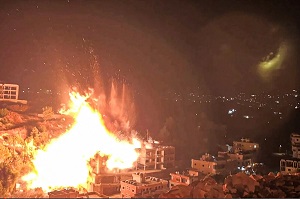
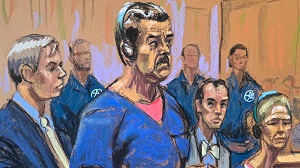
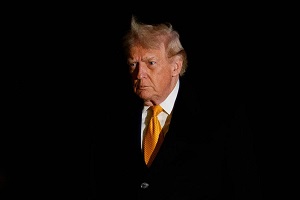
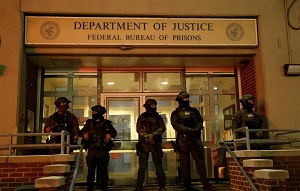
The overnight operation, described by the US President Donald Trump as a targeted action against alleged narco-terrorism, resulted in Maduro and Flores being flown to New York to face federal charges.
Trump announced that Washington would temporarily oversee Venezuela’s administration to ensure what he termed a “safe, proper and judicious transition” of power.
Reactions from regional leaders were largely communicated through statements and posts on social media platform X, reflecting the immediacy and political sensitivity of the unfolding developments.
Responses from Latin American governments have largely followed familiar ideological divisions.
Brazilian President Lula da Silva issued one of the strongest rebukes, saying the operation “recalls the worst moments of interference in the politics of Latin America and the Caribbean” and undermines the region’s status as a “zone of peace”. Mexico’s Foreign Ministry said it “energetically” rejected the strikes, calling for diplomacy and strict adherence to international norms.
Colombian President Gustavo Petro expressed concern over the bombings and warned of their potential impact on regional stability, stressing the need to avoid further escalation along the shared border.
He reaffirmed Colombia’s commitment to the principles of the United Nations Charter, including respect for sovereignty, the rejection of the use of force and the peaceful resolution of disputes, while underscoring the importance of protecting civilians and managing potential humanitarian and migratory repercussions.
Cuban President Miguel Diaz-Canel denounced the operation as a “criminal attack” and called for an urgent international response.
In contrast, Argentine President Javier Milei welcomed the development, posting “La libertadavanza” (Freedom advances) and describing the capture as a victory against dictatorship. He also expressed Argentina’s readiness to support a democratic transition in Venezuela.
Ecuadorian President Daniel Noboa praised the operation, warning that narco-linked networks would “collapse across the entire continent” and urging Venezuelan opposition figures to reclaim the country.
El Salvador’s President Nayib Bukele signalled implicit support through social media activity, while Paraguayan President Santiago Pena described the action as a blow to what he called an “illegitimate, rapacious and dictatorial” regime.
Chile’s president-elect Jose Antonio Kast, who is set to take office in March 2026, labelled Maduro’s removal “good news for the region” and called for regional coordination to facilitate the return of Venezuelan migrants.
The polarised reactions reflect broader regional tensions surrounding Venezuela, whose government has faced growing isolation over allegations of electoral fraud, prolonged economic collapse and a migration crisis that has forced nearly eight million Venezuelans to leave the country.
While few leaders publicly defended Maduro personally, many focused on concerns over the precedent set by direct US military involvement and its implications for sovereignty and regional stability.
As Venezuela enters an uncertain transition period, international attention remains focused on developments on the ground, with mounting calls for de-escalation, international mediation and respect for democratic processes. The long-term impact on regional stability remains unclear.