- Last Update06-Jan-2026


- Tweet
-
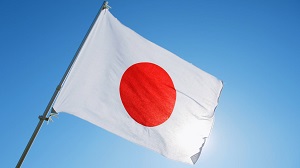
Strong earthquake jolts Western Japan; no tsunami warning issued
Roya News
Seismic Activity: A 6.2-magnitude earthquake struck Shimane Prefecture on Tuesday morning, followed by several significant aftershocks that prompted military aerial damage assessments and high-speed rail suspensions.
Safety Status: No tsunami warnings were issued, and officials reported no abnormalities at the Shimane nuclear power plant or immediate major casualties, though Prime Minister Takaichi warned residents to remain vigilant for further tremors.
A powerful earthquake with a preliminary magnitude of 6.2 struck western Japan on Tuesday morning, according to the Japan Meteorological Agency (JMA).
While the tremor shook buildings and disrupted transit, officials confirmed there was no risk of a tsunami and no immediate reports of major damage or casualties.
The JMA recorded the quake at 10:18 AM local time (01:18 GMT) with its epicenter located in Shimane Prefecture. The U.S. Geological Survey (USGS) initially measured the magnitude at 5.8 before revising it downward to 5.7.
Aftershocks and Infrastructure Impact
The initial quake was followed shortly by a succession of weaker but notable aftershocks. The JMA reported subsequent tremors with magnitudes of 4.5, 5.1, 3.8, and 5.4 in the same region, keeping residents on high alert.
Public broadcaster NHK, citing Chugoku Electric Power Company, reported that no abnormalities were detected at the Shimane nuclear power plant. However, the earthquake did impact the region's transportation network.
JR West, the operator of the high-speed "Shinkansen" rail line, announced that parts of the service were suspended due to power outages, though officials are still investigating whether the outages were directly caused by the seismic activity.
Government and Military Response
Prime Minister Sanae Takaichi stated that the government is currently centralizing information regarding potential structural damage.
She urged residents in areas that experienced strong shaking to remain vigilant against the possibility of further "earthquakes of similar intensity" in the coming days.
The Japan Self-Defense Forces (JSDF) mobilized aircraft to conduct aerial damage assessments and established an emergency response coordination center to assist local municipalities.
Region Prone to Activity
The memory of the catastrophic 9.0-magnitude undersea earthquake in 2011, which triggered a massive tsunami and left approximately 18,500 people dead or missing, remains a defining element of Japan's disaster preparedness.
Japan is situated at the intersection of four major tectonic plates along the western edge of the "Ring of Fire," making it one of the most seismically active nations in the world. The archipelago, home to 125 million people, experiences roughly 1,500 tremors annually. While most are minor, the potential for damage varies significantly based on the quake's location and depth.